Chair Yoga for Seniors with High Blood Pressure: Is It Safe?
For many older adults, chair yoga for high blood pressure can be a safe exercise for seniors because it is low impact, easy to scale, and less likely to trigger the sudden strain you get from harder workouts. That said, the word “safe” depends on how the class is taught and which movements are included. Gentle seated stretching, slow breathing, light mobility work, and supported posture practice are usually well tolerated. Long breath holds, strong twists, deep forward folds, and anything that makes you strain are where the trouble can start.
Here’s the practical answer most people are looking for: if blood pressure is reasonably controlled, symptoms are stable, and a doctor has not told you to avoid exercise, chair yoga is often a smart option for heart health. It helps people move without asking too much of the joints, and it can reduce stiffness, improve circulation, and lower stress. But “chair yoga” is a broad label. One class might feel like a calm mobility session. Another might sneak in poses and breathing drills that are a bad fit for someone with hypertension. The name alone doesn’t guarantee seated yoga safety. The details matter.
When You Should Check With Your Doctor Before You Start
If you have high blood pressure and you’re thinking about starting chair yoga, a quick medical green light is worth it, especially if your numbers run high, your medications were recently changed, or you also have heart disease, dizziness, shortness of breath, chest discomfort, kidney problems, or a history of stroke. This is even more important if you’ve been inactive for a while. Not because chair yoga is extreme. It isn’t. But because the safest routine is the one that fits your actual health picture, not a generic internet version of it.
There are also a few situations where you should pause and get advice before doing even gentle exercise: blood pressure that is consistently very high, frequent headaches linked to high readings, fainting, unexplained swelling, irregular heartbeat, or feeling winded doing very basic tasks. And if a class asks you to move from sitting to standing repeatedly, hold your arms overhead for long periods, or do strong breathing techniques, that changes the demand on the body. A doctor or physical therapist can help you sort out what’s appropriate. Better to spend five minutes checking than to guess wrong and end up scared off something that could have helped.
The Moves and Breathing Habits Most Likely to Cause Problems
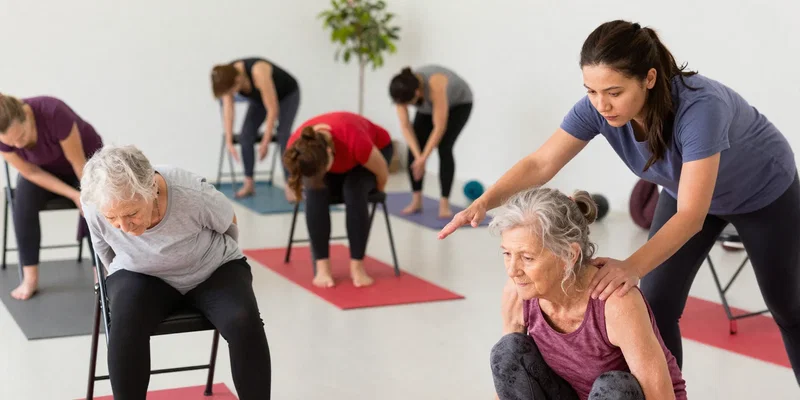
A lot of seated yoga safety comes down to avoiding pressure spikes. The biggest offender is breath holding. People do it without realizing it, especially when reaching, twisting, or trying to sit up tall. That brief strain can raise blood pressure fast. So can forceful breathing practices sometimes taught in yoga classes. Fast bellows-style breathing, aggressive breath retention, and any cue that tells you to “lock in” your core while holding the breath are poor choices for seniors with hypertension.
Deep forward folds can also be uncomfortable, especially if the head drops below the heart or the belly gets compressed and breathing becomes restricted. Same with intense twists cranked from the waist, long overhead arm holds, and isometric effort where you’re pushing or pulling hard without much movement. None of this means yoga is off the table. It means the class should favor smooth range-of-motion work instead: ankle rolls, shoulder circles, gentle side bends, supported chest opening, slow neck mobility, easy seated marching, and relaxed breathing that never feels forced. If you can talk in full sentences while doing it, you’re usually in the right zone.
What a Blood-Pressure-Friendly Chair Yoga Session Actually Looks Like
A good chair yoga session for someone managing high blood pressure is usually slower and less dramatic than people expect. That’s a good thing. It might start with sitting tall near the front of a sturdy chair, both feet flat on the floor, followed by a minute of natural breathing. Not deep breathing. Not forced breathing. Just steady, easy breaths. From there, you might do shoulder rolls, wrist circles, ankle pumps, gentle marching in place, and light side-to-side reaching. The goal is to warm up gradually, not chase a stretch.
As the session goes on, the best sequences alternate effort with recovery. Maybe a supported seated side bend, then a return to neutral. Maybe a gentle chest opener, then hands resting in the lap. Maybe one arm lifts at a time instead of both together. That small change can make the work feel much easier. A smart teacher will keep cues simple: move slowly, breathe normally, stop before strain, and come out of any position that makes you feel pressure in the head, neck, or chest. For many older adults, 10 to 20 minutes is enough at first. You do not need a long session to get real benefit for mobility, confidence, and heart health.
How to Tell If the Class Is Helping or If It’s Too Much
The body usually gives pretty clear feedback when something is working. After a suitable chair yoga session, you should feel a little looser, a little warmer, maybe more upright, but not wiped out. Breathing should settle quickly. You shouldn’t feel shaky, nauseated, or strangely heavy. If you monitor your blood pressure at home, it can be useful to check it at your normal times and notice patterns over a few weeks rather than obsessing over one reading right after movement. Stress, timing, and medications all affect the numbers.
Pay attention to warning signs during or after practice: chest pain, unusual shortness of breath, dizziness, blurred vision, pounding headache, feeling faint, confusion, or a racing or irregular heartbeat. Stop right away if those show up. Less dramatic signals matter too. If a session leaves you holding your breath, clenching your jaw, or feeling pressure in your face, it’s probably too intense or too fast. That doesn’t mean you failed. It means the routine needs better modification. Good exercise for high blood pressure should leave you feeling steadier, not wrung out.
Small Setup Choices Make Chair Yoga Safer and More Effective
The chair matters more than people think. Use a stable chair that doesn’t roll, ideally without arms if they get in the way, though armrests are fine if you need them for support. Sit toward the front edge only if that feels secure; otherwise sit back with good contact and keep both feet grounded. Avoid floppy couches, swivel chairs, and anything that makes your hips sink down. If balance is shaky, place the chair near a wall or countertop. Those boring little decisions are what turn safe exercise for seniors from theory into reality.
Timing matters too. Don’t jump into chair yoga right after a heavy meal, and don’t rush through it when you’re stressed and breathing hard already. Keep water nearby, wear clothes that let you move, and stand up slowly afterward so your blood pressure has time to adjust. If you’re taking blood pressure medication, especially meds that can make you lightheaded, be extra careful with position changes. And if you’re following a video, be picky. Look for instructors who understand older bodies, mention modifications often, and never treat discomfort like a badge of honor. For seniors managing hypertension, the best yoga class is the one that stays calm, controlled, and a little humble.